September 24, 2026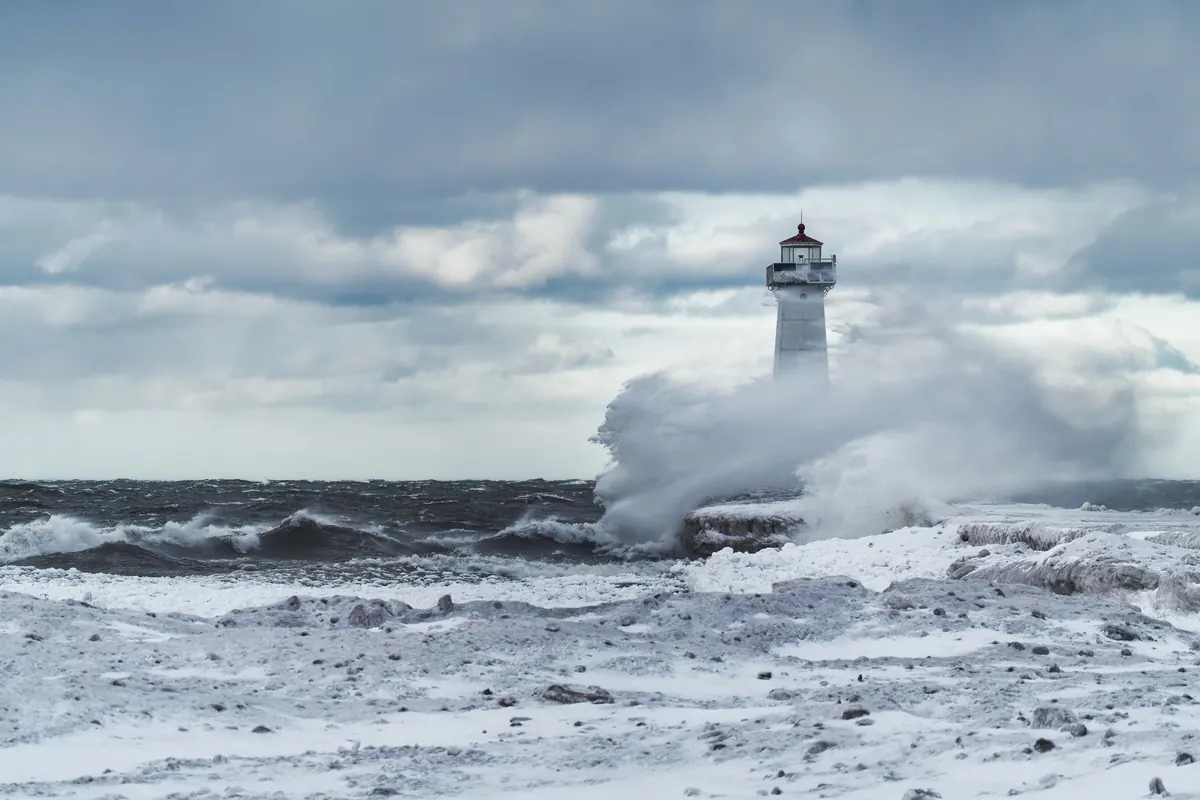
Most lighthouse visitor centres are busiest in July, when the car park is full by ten and the tower tours sell out before lunch. Winter turns that on its head. Hours shrink, headlands empty, and the weather reminds you exactly why the building is there. There is a trade-off: you plan around shorter days and reduced opening, and a few sites shut altogether between November and March. The seven lights below, though, are at their most compelling in the cold months, whether you climb the tower or simply stand on a cliff and watch the sea do its worst.
Why winter suits a lighthouse
Three things change after October. First, the light earns its keep. With dusk falling by half past four in northern Scotland in December, you can watch a lamp strike up and a beam begin to turn, then walk back to the car while there is still enough light to see the path. That is not an option on a July evening.
Second, the crowds go. Cliffs that hold hundreds of people in August will often hold three or four in January.
Third, the sea gets interesting. Atlantic depressions and North Sea gales push swell onto headlands, so waves break higher and further out than at any other time of year. That is the drama people come for, and it is also the reason to keep your distance.
1. Souter Lighthouse, South Tyneside
Standing on low cliffs between Whitburn and Marsden, Souter is a red-and-white striped landmark with a decent claim to fame: built in 1871, it was the first lighthouse designed from the outset to run on electric light. The National Trust cares for it, and volunteers generally lead tours up the tower and through the engine room when it is open. Winter opening is limited, so check ahead before making a special journey. Even if the tower is shut, the clifftop walk towards Marsden Rock and the Leas is worth the trip, and eider ducks and cormorants work the bay all winter.
2. Flamborough Head, East Yorkshire
The chalk headland at Flamborough gives you a white 1806 tower, a network of clifftop paths, and the great curved bays of Selwicks and North Landing within an hour's walking. The gannets that pack nearby Bempton in summer have gone by late October, but the cliffs themselves are still enormous, and winter brings divers, grebes, pale-bellied brent geese and the occasional short-eared owl hunting the stubble. In a northerly gale, spray comes over the headland in sheets. The visitor centre tends to run very reduced hours out of season, so treat the building as a bonus and the walk as the main event.
3. Dungeness, Kent
Dungeness is not for everyone. A shingle foreland the size of a small town, it is technically a desert, and on a grey January afternoon the flatness, the power stations and the droning wind can feel like the end of the world. That is precisely the appeal. The Old Lighthouse, built in 1904, is a visitor attraction with a climb to the top, and the working Trinity House tower stands a short distance away. The RSPB reserve behind them is excellent for winter wildfowl, and the Romney, Hythe and Dymchurch Railway runs a reduced winter service, so check the timetable before you build a day around it.
4. Portland Bill, Dorset
Portland has three lighthouses: the 1906 tower that still operates, the Old Higher Lighthouse, now a holiday let, and the Old Lower, which houses the Portland Bird Observatory. The Bill takes the full run of Atlantic swell, and the tidal race offshore is one of the more violent stretches of water around Britain. On a big winter sea, spray can be thrown right over the obelisk at the southern tip. Standing on the clifftop behind the fence, with Chesil Beach running away to the north-west, is a fine way to spend a cold afternoon. Tours of the working lighthouse are seasonal, so check before travelling.
5. Lizard Point, Cornwall
The Lizard is the most southerly point of the mainland and the mildest corner of Britain. Frost is rare here, which makes it one of the few places where a winter cliff walk is comfortable rather than a test of character. The lighthouse, with its two towers, sits above a bay that takes Atlantic weather head-on, and the heritage centre explains the long history of warning ships off these rocks. Choughs, grey seals and the coast path towards Kynance Cove are the other reasons to come. Heritage centre opening varies out of season; the point itself is always there.
6. South Stack, Anglesey
South Stack sits on its own island below the cliffs of Holy Island, reached by a bridge and a long flight of steps. The lighthouse itself is a holiday let rather than a visitor attraction, and the steps can be closed, sometimes for maintenance and sometimes for nesting seabirds, so check locally before you set off down. What brings people here in winter is the watching: choughs and ravens on the wind, peregrines working the cliffs, divers and grebes on the sea. The RSPB reserve has a viewing centre at Ellin's Tower, though its hours are shorter out of season.
7. Mull of Galloway, Dumfries and Galloway
Scotland's most southerly point, with a Robert Stevenson tower first lit in 1830 and an RSPB reserve on the same headland. The exhibition and café are seasonal, but the cliffs are not, and neither is the view across the North Channel to the Isle of Man and, on a clear day, to Ireland. Winter brings geese and wildfowl to the Solway, bracing walks and genuinely dark skies after sunset. The Galloway Forest Dark Sky Park lies to the north, and this corner of Scotland is a good place to watch for the aurora when solar activity is high.
Storm watching: how to do it safely
Big seas are the whole point of a winter visit, and they are also where people get into trouble.
Reading the water
Waves arrive in sets, and the largest of a set can travel much further up a slope than the ones before it. Watch a headland for ten minutes before deciding where to stand, then pick a spot well back from the edge, behind any fence or wall. Wet rock, wet concrete and wet grass are all slippery; seaweed is worse. Never turn your back on the sea to pose for a photograph.
Staying safe
- Check the forecast, including wind speed and direction. An offshore wind can make a spot feel calm while the sea is still running big.
- Read local signage and follow HM Coastguard and RNLI advice. If a path or a flight of steps is closed, there is usually a reason.
- Carry a torch, a charged phone and a spare warm layer; coastal signal is patchy.
- Tell someone your route and your expected return time.
- Keep children and dogs close on cliff edges, and if in doubt, watch from the car park.
Planning a winter lighthouse trip
Almost everything that catches people out in winter is about timing rather than weather. Sunset in mid-December ranges from before a quarter to four in the far north to around twenty past four in Cornwall, so work backwards and plan to be off the cliff path with half an hour of daylight to spare.
Reduced opening is the other trap. Many visitor centres switch to weekends only from November, and some close through January and February. Check the operator's website, whether that is the National Trust, Trinity House, the RSPB or an independent trust, on the morning you travel. If access involves a causeway or a set of tidal steps, add a tide table to your list. Cafés and toilets often shut too, so take a flask and something to eat, and check whether village pubs are running winter hours.
What to pack
- Waterproof boots with grip, a windproof shell, hat and gloves.
- A head torch rather than a phone torch, so your hands stay free.
- Binoculars, which turn a grey sea into something worth watching.
- Cash or a card for rural car parks whose charges change out of season.
None of this is complicated, but it repays twenty minutes of planning the night before. For coastal walking and storm watching, follow the safety guidance from the RNLI and HM Coastguard, and if conditions look marginal, save it for another day. Do that, and a winter lighthouse, empty and wind-scoured with the lamp beginning to turn, will beat a crowded August car park every time.
Photo: James Mirakian / Pexels