September 12, 2026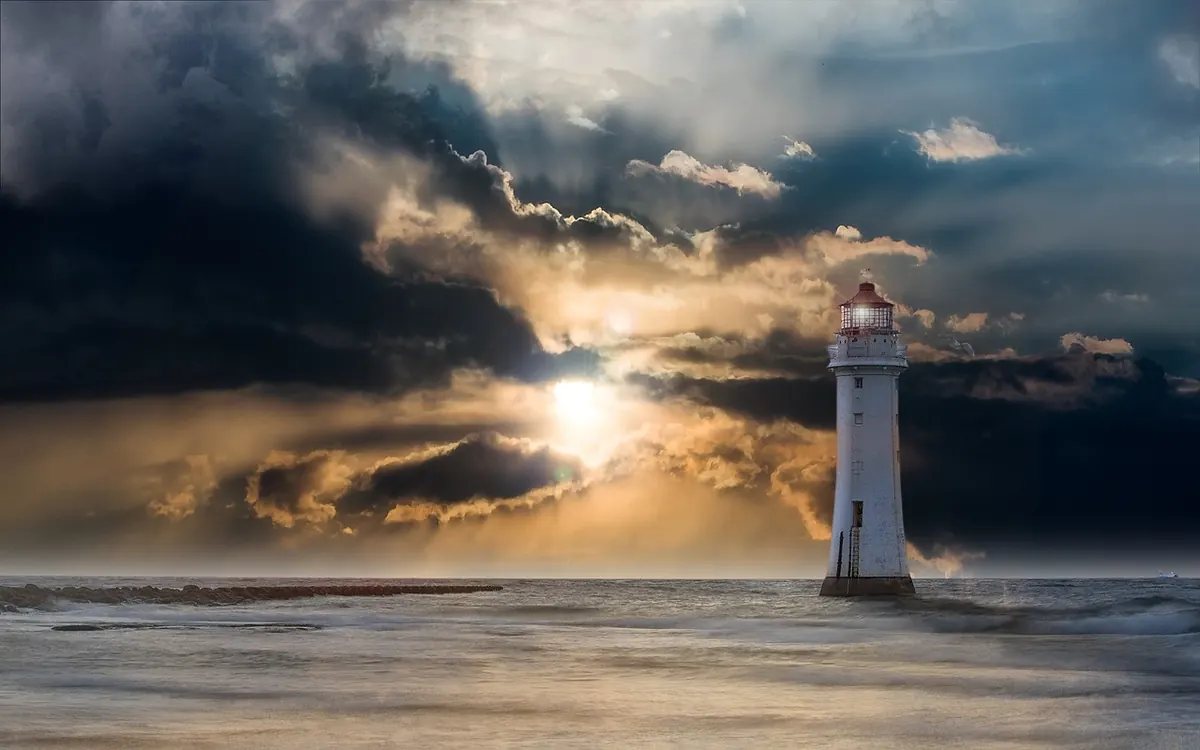
Most people recognise a lighthouse the way they recognise a post box: it is red, it is round, and it stands somewhere dramatic. Spend an afternoon on the coast, though, and the picture complicates beautifully. A squat iron tower on a pier end, a wave-battered granite column on a reef, and a tall striped landfall light above a headland are all lighthouses, and all built for quite different problems. Once you know what to look for, you can usually work out which is which from a car park, a ferry or a clifftop path.
Start With the Job, Not the Shape
Before you study a tower, ask what it is protecting. British lights divide fairly neatly into three working families, and the structure follows the function almost every time.
- Harbour and pier lights guide vessels through a narrow entrance or along a channel. They are close to shipping, so they are small and often show coloured sectors.
- Rock towers stand on reefs and isolated rocks, where the sea itself is the main enemy. They are braced, tapered and built to be struck by water.
- Landfall lighthouses mark a headland or a major approach, seen from many miles out. They are tall, well built and usually come with a cluster of buildings.
Trinity House looks after the lights of England, Wales and the Channel Islands, the Northern Lighthouse Board covers Scotland and the Isle of Man, and Irish Lights serves the island of Ireland. Whichever authority built the tower, the design logic holds.
Harbour and Pier Lights: Small, Low and Practical
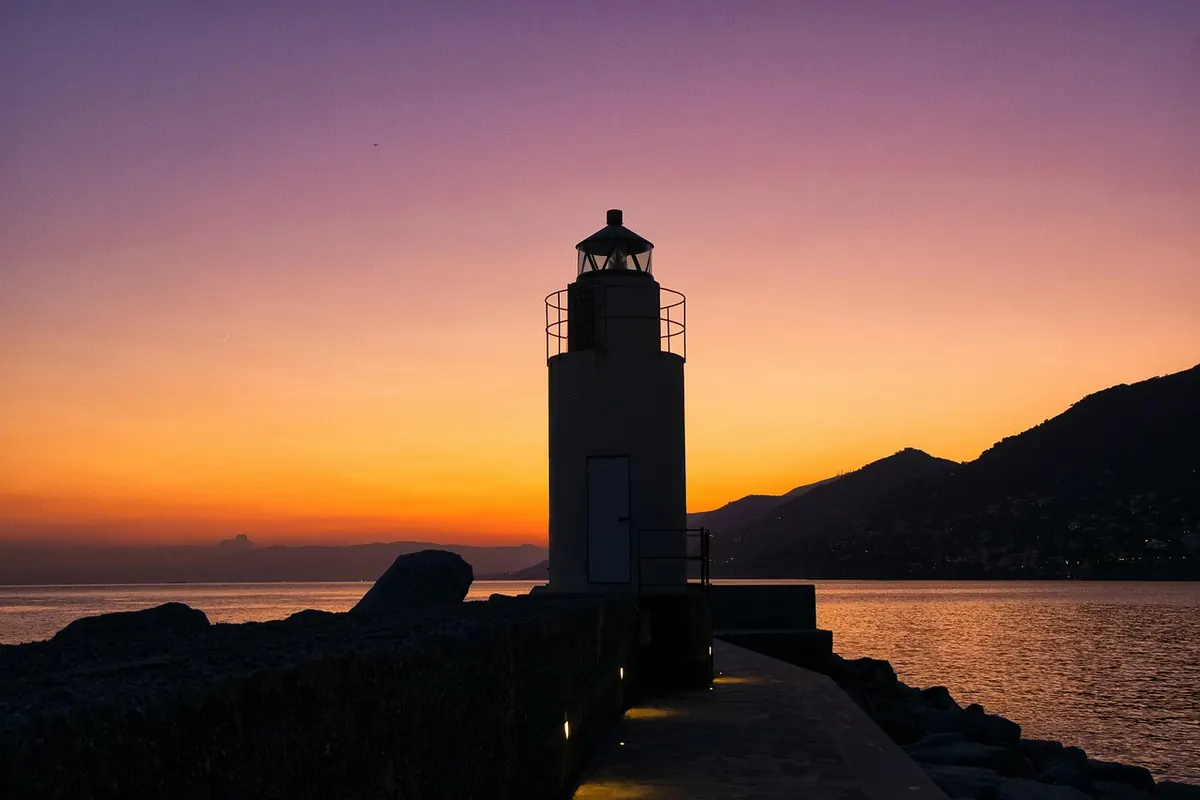
These are the lighthouses you can walk right up to. Look for a short tower, often no more than a few metres, sitting on a pier head, breakwater, quay or the end of a training wall. Cast iron is common because it arrives in sections, bolts together quickly and survives salt spray reasonably well. Many are painted white, with the lantern picked out in a contrasting colour.
The lantern itself is usually small, with a simple domed roof and a modest gallery. You will often see a pair of them — leading lights — arranged so that a mariner lines one above the other to stay in the fairway. Colour tells its own story: a white sector means you are in the safe channel, red or green means you have strayed off it. Because the light only has to carry a few miles, the optic inside can be small and light, and the whole station is likely to be unmanned, sometimes no more than a pole with a lamp on top.
Rock Towers: Built to Be Hit by Water
Now picture the opposite problem. A rock tower stands on a reef that is awash in bad weather, so it must be heavy, stable and impossible to shift. The classic examples — the granite towers of the Eddystone, Bell Rock and Skerryvore — share a family resemblance: a wide, flared base that spreads the load, sharply tapered walls, and stone blocks dovetailed together so the sea cannot lever them apart. Smeaton's Tower, the third Eddystone light, now stands on Plymouth Hoe, and walking around it is the easiest way to appreciate how thick those walls really are.
Practical details give these towers away. Windows are few and small. The entrance door sits high above the base, reached by a ladder or a derrick, because the lower courses are regularly under water. There are usually no keeper's cottages alongside — the keepers lived ashore and worked in shifts — and many towers now carry a helipad on top, a legacy of the years when crews had to be lifted on and off by helicopter.
Landfall Lighthouses: Tall, Painted and Sociable
A landfall light is the first thing a vessel sees after days at sea, so it needs height and reach. These towers sit on headlands, cliffs and islands at the edge of a major approach, and they are often the tallest structures for miles: slender masonry shafts, banded in red and white or black and white so the tower reads clearly against sky or cliff. The bands are a daymark, a shape you can identify in daylight without any light at all.
Look around, not just up. A landfall station usually comes with a walled compound, one or more keeper's cottages, a store, and a fog signal building with its trumpet-shaped emitters. That little village is the clearest sign that you are looking at a major coastal light rather than a harbour lantern.
Materials and Age Leave Their Mark
Fabric is a useful dating tool. Rough rubble stone suggests an early tower, often eighteenth century. Fine ashlar granite points to the great nineteenth-century engineering programmes, when Stevenson and his contemporaries were building on exposed rocks. Brick appears where the geology was kind, and cast iron was favoured for pier lights and for the internal floors and stairs of many towers. Reinforced concrete turns up in twentieth-century work, including replacement towers and wartime structures.
Interiors tell the same story. If you ever get inside a working light, look at the stairs: stone spiral steps in an old tower, iron treads in a Victorian one. Look too for the old weights and chains of a clockwork mechanism, now standing idle beside the modern electric drive.
The Lantern: Read the Top of the Tower
The lantern is where the identification game is won. Size matters: a big, wide lantern room once held a first-order Fresnel lens, the sort of heavy glass optic needed to throw a beam many miles, and it belongs to a landfall or major coastal light. A small lantern with a simple modern lamp belongs to a harbour or pier light.
Then look at the roof and the railings. A copper dome, weathered to green, with a ventilator ball on top, is the classic British pattern. A gallery with a railing around the outside means someone once had to walk out there to clean the glass — a job that must have been bracing in a winter gale. Glazing bars, the metal strips dividing the panes, are comparatively thin on modern lanterns and heavier on older ones. And if you can see the glass is set at an angle, sloping inwards at the top, you may be looking at the helical or diagonal framing used in some rock towers to shed the worst of the weather.
Five Field Checks
- Height and setting: short and close to shipping means harbour; tall on a headland means landfall; isolated on a reef means rock tower.
- Door position: a door at ground level suggests a sheltered site; a door high up suggests waves.
- Daymark: painted bands, diamonds or a coloured tower are there to be recognised in daylight.
- Companion buildings: cottages, stores and fog signal huts mean a major station.
- Lantern size and roof: large glasshouse and copper dome equals serious optic; small lantern equals local guidance.
Putting It Into Practice
Next time you are on the coast, give yourself a minute before you take the photograph. Note the setting, the height, the material and the lantern, in that order, and say out loud which family you think it belongs to. Check yourself against a chart, an Ordnance Survey map or the relevant lighthouse authority's own listing, and see where you were wrong. Do that half a dozen times and the shapes will start sorting themselves. Keep a notebook, jot the date and the weather beside the sketch — the same tower looks like a different building in a January swell, and that contrast is half the pleasure of the hobby.
Photo: PIRO4D / Pixabay