September 20, 2026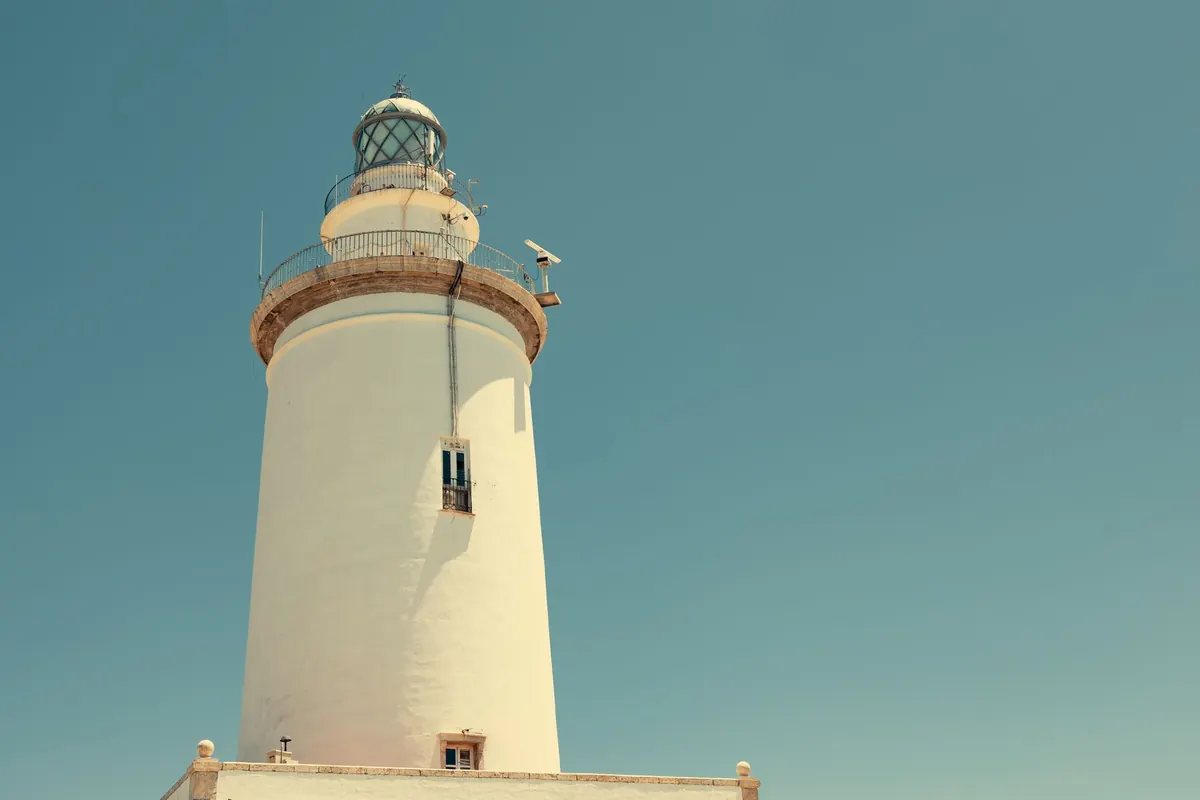
Almost every lighthouse in Britain carries a small clue to who looks after it. Sometimes it is a plaque by the door, sometimes a line in a guidebook, often just a name on a chart: Trinity House, or the Northern Lighthouse Board. Visitors tend to treat the two as interchangeable. They are not. They cover different coasts, answer to different histories, and look after very different kinds of shoreline.
Two authorities, two halves of the map
Trinity House is the General Lighthouse Authority for England, Wales, the Channel Islands and Gibraltar. The Northern Lighthouse Board — officially the Commissioners of Northern Lighthouses — covers Scotland and the Isle of Man. The boundary between them runs roughly along the English–Scottish border, which is why a light on the Solway coast sits with Trinity House while the Mull of Galloway belongs to the Board.
Northern Ireland is the interesting exception. It is part of the United Kingdom, but its aids to navigation fall to the Commissioners of Irish Lights, based in Dublin and responsible for the whole island. So anyone who tells you there are only two lighthouse authorities in these islands is forgetting a third.
Four centuries apart: how each began
Trinity House is by far the older. It was granted its first Royal Charter by Henry VIII in 1514, when it was a guild of mariners at Deptford concerned with pilotage, seamanship and the welfare of seafarers and their families. Its Master has traditionally been a member of the Royal Family. Lighthouses were not its original purpose; responsibility for the lights of England came later, through the Merchant Shipping Act of 1836, which tidied up a patchwork of private and harbour-owned lights into something closer to a national system.
The Northern Lighthouse Board arrived much later and for a more urgent reason. Shipowners and merchants petitioned Parliament after a run of wrecks on the Scottish coast, and an Act of Parliament in 1786 created the Commissioners. Their first light was lit at Kinnaird Head, near Fraserburgh, in 1787.
The Stevenson years
The Board then had the good fortune to employ a family of engineers whose name is now inseparable from Scottish lighthouses. Thomas Smith took on his stepson Robert Stevenson, and between them and their descendants came Bell Rock in 1811 — the oldest surviving sea-washed lighthouse in the world — followed by Skerryvore, Dubh Artach and a string of towers on some of the most exposed rock in Europe. Robert Louis Stevenson, who grew up in that family, turned away from engineering and wrote Treasure Island instead.
What they actually do
The romantic image is a keeper winding a clockwork mechanism. The modern job is closer to running a national network of automated sensors. Both authorities are responsible for the same broad set of duties:
- Building, maintaining and monitoring lighthouses, buoys and beacons across their area
- Marking wrecks and new hazards to navigation, and dealing with dangers that cannot be moved
- Providing electronic aids such as automatic identification system (AIS) signals and radio navigation
- Inspecting and approving local aids to navigation installed by harbour authorities
- Advising government and international bodies on navigation safety
Trinity House adds two roles that the Northern Lighthouse Board does not have. It licenses deep sea pilots, and it runs a substantial charitable programme, giving grants to maritime training, welfare and safety projects.
Where the money comes from
Neither authority is funded by general taxation. Ships calling at UK and Irish ports pay light dues, and that money goes into the General Lighthouse Fund, which is administered by the Department for Transport. The three authorities — Trinity House, the Northern Lighthouse Board and Irish Lights — draw on that fund to run their services. It is a neat arrangement in principle: the vessels that benefit pay for the lights, and the fund is not supposed to accumulate reserves.
Keepers, ships and automation
The biggest change of the last fifty years was the withdrawal of the keepers. Automation spread through the 1970s and 1980s, and the last staffed stations were demanned in the late 1990s. Where a lighthouse once needed three men on rotation, it now needs a solar panel, an LED array and an occasional visit by helicopter or boat.
Monitoring is done remotely — Trinity House from its control centre at Harwich, the Northern Lighthouse Board from Edinburgh. Both keep tenders for the work that cannot be done from a desk, and both maintain buoy depots, at Harwich and at Oban respectively. Buoys are lifted, shot-blasted, repainted and re-laid on a rolling cycle, which is the least glamorous and most safety-critical part of the job.
Practical: working out who looks after a light
If you are researching a lighthouse, writing about one, or just curious about the tower you can see from the beach, the geography gives you the answer almost every time.
- Scotland or the Isle of Man: it is the Northern Lighthouse Board.
- England, Wales, the Channel Islands or Gibraltar: Trinity House.
- Northern Ireland: Irish Lights.
- If it stands on a harbour wall or pier, though, it may belong to the port or harbour authority, which is responsible for its own local aids to navigation.
- Many former keeper's cottages have passed into other hands, so the building and the light may have different owners.
Both organisations publish lists of their stations, and their archive material is genuinely useful if you are tracing a light's history — the Board's records sit with the National Records of Scotland, while Trinity House holds its own. Failing all that, look for the name on the door. It is usually there, weathered but legible, and it settles the question in seconds.
Photo: Brendan Rühli / Pexels